Thursday, 11 December 2008

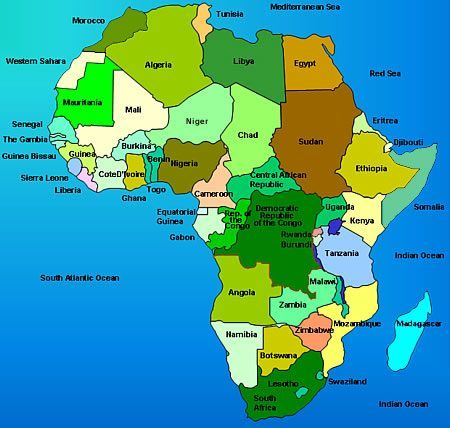
Africa


Help a school in Eritrea

Mr Stubberfield is visiting Eritrea this Christmas to spend some time working in a school. He would like to bring any good quality books and educational supplies for the children. If you have any then please bring them to Mrs Stevensons office before the end of term.

If you would like to know a little more about the country then there are some links below:

Eritrea (Wikipedia)

Eritrea (BBC Africa)

Eritrea (CIA)

Africa


GLOBAL ISSUES

Every year as part of the Year 9 PSHEplus curriculum we do a global issues/politics module where we research the political and socio-economic issues affecting an African country undergoing conflict.


As part of this project the pupils set out to "rebuild" a country following prolonged conflict, by re-introducing democracy to a country previously run by a dictatorship. They form political parties and develop their own manifestos, with promises that have to be backed with substance. They then undergo an election campaign where they produce posters, fliers, badges and party political broadcasts. They have "local elections" in form groups and then a general election with the top 4 parties running with a president and leading party being elected.

This has always been a very successful module and many year groups have been deeply moved by the various videos we have watched, facts that we have found out and students have grown in their awareness of political issues. We have written to the President of the USA, Prime Minister of Great Britain, Deputy Prime Minister of Sierra Leone and Secretary-General of the United Nations. We have also had year groups so determined to make a difference they have shown their broadcasts in assembly and organised charity days to raise money that supported villages in Sierra Leone by buying chicken farming businesses and training.

This year we are considering investigating either Zimbabwe or the Congo as both these regions are experiencing very extreme political situations. However we may also look at Eritrea as Mr Stubberfield has connections with a local community. As the school has a philosophy of ensuring money raised by us goes directly to the communities and people in need (and not lost within huge charity "machines") this may well be an opportunity to once again make a significant impact on peoples lives.

The project is due to start after Christmas so keep an eye on the blog for the students election campaigns. Meanwhile make sure you checkout the post on Mr Stubberfields book collection campaign for an Eritrean school.

Tuesday, 2 December 2008

Doing two things at once


In a recent PSHE+ lesson with Year 10 we were looking at time management and completed surveys on how much time we spent on different activities. We differentiated between maintenance time (eating, washing, sleeping etc.), sold time (time spent in school, on chores, on homework and other commitments) and chosen time (real free time).

We discussed how we can manage our time carefully and realise that we have more chosen time than we thought. One idea is using maintenance time to also do tasks such as reading notes and textbooks. So for example we could read in the bath, whilst we are travelling or waiting for lifts/buses. Whilst watching our favourite tv programmes we could also be doing some maintenance time work such as nails, hair, ironing (yes teenagers...you are capable of this amazing act), keeping fit (put your exercise bike in front of the tv) and even eating (though I am not necessarily advocating tv dinners). The key thing is not to waste time, not to let it drift away from us whilst we mooch about, dithering about starting homework, chores etc. Do not watch any old thing on TV but do use your chosen time fully as our relaxation time is as valuable as any other thing we do.

However there are some things we cannot double up. Many students admitted to studying whilst having their tv on and having their computer logged onto MSN. They felt that they could manage all these different activities but did admit that they probably are not working as efficiently as they could. I came across this piece of information and thought it mmight be of interest to those of us who think we can multi-task whilst working:

A few years ago, Dr. Marcel Just, co-director of the Center for Cognitive Brain Imaging at Carnegie Mellon University in Pittsburgh, published a study that was widely used to justify laws banning people from using cells phones while driving. This was the first study using magnetic resonance images of brain activity to compare what happens in people's heads when they try to do two tasks at a time. The study revealed that brain activity does not double. Instead, the brain activity devoted to each task decreases. People performing two tasks simultaneously do neither one as well as they do each one alone. Performance always suffers.


So when studying or doing any important activity it is best to focus only on that task, with at most quiet, concentration inducing music in the background. We did agree that perhaps it would be more effective to focus on the work first. This way the work would be of a better quality and even finished in a shorter amount of time. This would then mean the remaining time would be completely free to spend how we chose, with no horrid deadlines hanging over our heads...bliss!

So leave the multi-tasking to maintenance and chosen time. Sold time requires more concentration.


Thursday, 20 November 2008

REMINDERS

Don´t forget to look at the links. There is a good study skills and revision link that provides revision planners and advice. Also the BBC Schools site gives you lots of subject revision links (scroll down pass the poll questions, the links are underneath).

Also please have a go at the poll to the left.

Tuesday, 18 November 2008

Study advice from Year 11


General Advice:

Ask your teacher for help when you don´t know how to do something because she can explain it to you so you understand.

Keep your notes really neat so you can read over them in Year 11.

If you are behind in theory catch up in lunch

Go to bed before midnight

Go to bed early so that you can focus during lessons

(Loads of students commented on this issue, recommending getting lots of sleep).

Cut down on your social life a few weeks before the exam.

Make your own notes which you can glance back at before the day of your exams, to refresh your memory.

Make sure that notes are written down during lessons, as that lesson may never come again.

Keep sports and studying in balance.

Make sure that all your coursework, especially ICT, is handed in on time.

If you don’t complete the coursework by the deadlines then you miss your lunchtimes.

Organize your notes.

Take away major distractions such as World of Warcraft.

DO NOT Play WOW: it is one of thr most highly addictive games you can play.

Maintain a healthy lifestyle e.g. fitness.

Have a 5 minute break every 40 minutes.

Stay hydrated as dehydration causes lack of concentration.

Set units of time throughout your week ie. 1 unit = 30mins, so do 3 units each day spread out.

DO NOT let your social life take over your academic studies.

Do your best during lessons, listen to the teacher. That way when you revise you’ll realize you know the stuff and you can focus on things you don’t know.

Make a timetable.

Don’t be shy in class when asking questions.

If you have a laptop remove the internet connection before doing homework.

Make sure your activities after school aren’t too much and that you have time for your homework.

If you don’t understand something in the subject then make sure you go and ask the teachernto properly explain it to you, don’t leave it to the last minute.

Don’t take too many sick days off school or you will get really behind.

Make sure your coursework is to a high quality don’t be lazy with it. You can walk into your GCSE’s with up to 60% of your work done (100% if you do drama).

And worthy of repeating:

Take control of your computer addictions

And from one student…..

“Quit yo jibba-jabba during the class foo’” (in a Mr T voice)

Study advice from Year 11

Homework:

Don´t leave your homework and studying till the last minute.

Don´t start at 9pm.

Get your homework done as soon as possible

After you have done a lesson read through your notes at home.

Try to hand in work before the deadlines.

Do work on the day it is set.

Don’t watch TV when doing homework.

Try to not spend all your time on homework and leave some time for revision.

Don’t leave all your homework for the week end, otherwise you will not have much time for relaxing, which is important.

Study advice from Year 11

Revision:

Create a revision timetable

Have little 10 minute breaks every hour.

Make conclusions after each paragraph

Just LISTEN in class and think to yourself “do you understand it”

Use Cue cards for definitions and test yourself until you can remember the answers with ease.

Get off Facebook/MSN/ichat etc. (loads of students suggest this)-TURN YOUR COMPUTER OFF.

Get Sleep!

Read through your textbook.

Concentrate when you are reading, don´t be thinking about other things.

Make yourself a little revision test on each topic and test yourself.

Keep your books and notes fromYear 10.

Try and have an area where you do your revision which doesn’t have any things to distract you.

Always revise the stuff you don’t like first.

Don’t just copy notes from a book.

If you have an exam coming u split the subject into topics and learn each topic per night.

Revise how you want to: drawing pictures could help you to understand.

Create shortened versions of your information that you are studying, which includes all the main points.